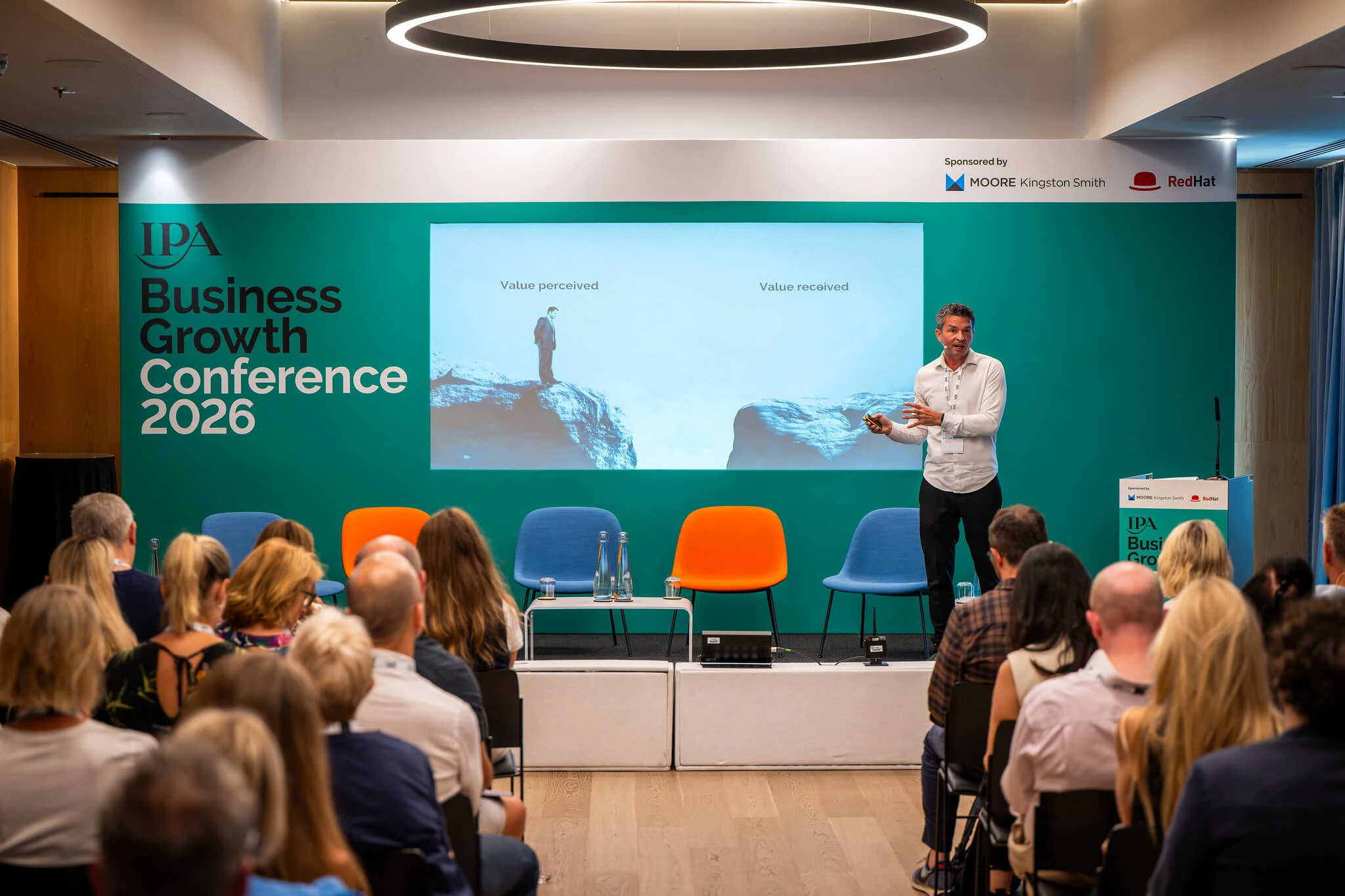
Clearly clients are wrestling with unprecedented, disruptive change. This has dramatically affected how they buy.
Back in the day, clients were confident assessing agencies offering established services. But now that they’re weighing-up emerging disciplines and novel solutions, they’ve become much less sure-footed.
Their complex modern problems require more tailored expertise. Add urgency and uncertainty into the mix and you have a huge opportunity for value creation for both parties.
So why are so many agencies still clinging to an outdated growth model?
Make the brief, don’t take the brief
Pitching is a case in point. Most agencies recognise that subjective beauty parades offer poor odds. And even when you win, you’re often playing catch-up commercially.
The alternative is to get upstream of demand.
Smart agencies talk to clients before the direction is set. Favouring open conversations over receiving briefs, they selectively target clients who need their specific expertise. Their clients say ‘I need your help’ not ‘I need you to do this’.
For those with propositions that warrant it, other agencies get in even earlier, focusing on uncovering needs. Their clients say ‘you’ve made me realise I need to change’.
It’s all a far cry from smarming your way onto a pitch list. The traditional ‘harvesting demand’ approach to growth is no longer fit for purpose.
Getting beyond capabilities
Another reason for growth getting harder is the convergence of agency disciplines.
Mark Read’s recently announced turnaround strategy for WPP outlined their ‘new’ focus around “communications, experience, commerce and technology”. And if you couldn’t have predicted that, then you probably shouldn’t be running an agency.
You might argue that WPP’s scale offers some differentiation, but any agency crafting a positioning from these generic capabilities will surely end up in buzzword bingo-land, trading on price and hyperbole.
Suffice to say that simply re-articulating your capabilities - like ad agencies ‘creating culture’, content shops making ‘work people want’ or CRM specialists who ‘get, grow and keep customers’ - will not help you stand out.
A fork in the road
These reductions in client confidence and agency differentiation present a choice for agency CEOs.
The easy option is to just work harder. But failing to see that what got you here won’t get you there will increase employee burnout and churn - not least in the cyclical hiring-and-firing of new-business people as panaceas.
Alternatively, you can be proactive, move upstream and adopt a more selective growth model, designed for these new client behaviours and market dynamics.
Not much of a choice, is it? In fact, a more strategic, diagnostic approach is becoming a necessity for everyone, not just the progressive few.
Barriers to growth
If you do decide to change, there are some challenges to be aware of.
While the basic tenets of growth - reaching an audience, creating solutions, profitable delivery - are consistent, the necessary changes to focus, habits and mindset are transformational. But it’s easy to dismiss these as subtleties.
Another hurdle is analysis paralysis. You have the desire to change, but it can feel like staring at a mixing desk, with no idea which buttons and sliders to try. So it's no surprise that the urge passes and nothing changes.
It’s also easy to underestimate time-pressure and complacency. You might know what to do but just not have the time. But if growth is a genuine priority, then you have to ask why you’ve allowed BAU to hold you back.
Building your agency’s Customer Experience
Getting upstream in client decision-making boils down to risk and reassurance. They have more at stake than ever, so you need to do more to prove you’re a safe bet.
Interestingly, this same dynamic is also playing out in the wider business world, as customer experience has become the modern battleground for brands.
For consumers, brand experience trumps brand communication in the battle for loyalty. And as services, channels and choice have proliferated, it’s never been harder to choose a brand or easier to switch.
It’s same for clients and agencies.
Agencies offering single disciplines used to target a well-defined audience of informed, confident buyers via a simple route to market.
But now there’s a chronic oversupply of generic agencies, huge variation in buyer profiles, needs and knowledge, and a wide range of channels through which to reach them.
No wonder clients are crying out for specialist expertise to emerge from the noise.
Until agencies get better at proving they can solve a problem, you’ll keep seeing prescriptive briefs, project-based engagements and ill-informed selection processes that lead everyone down the garden path.
The answer is to improve your own agency customer experience - providing clients with reassurance through everything you say and do.
In which case, the big question for agency CEOs is where to start.