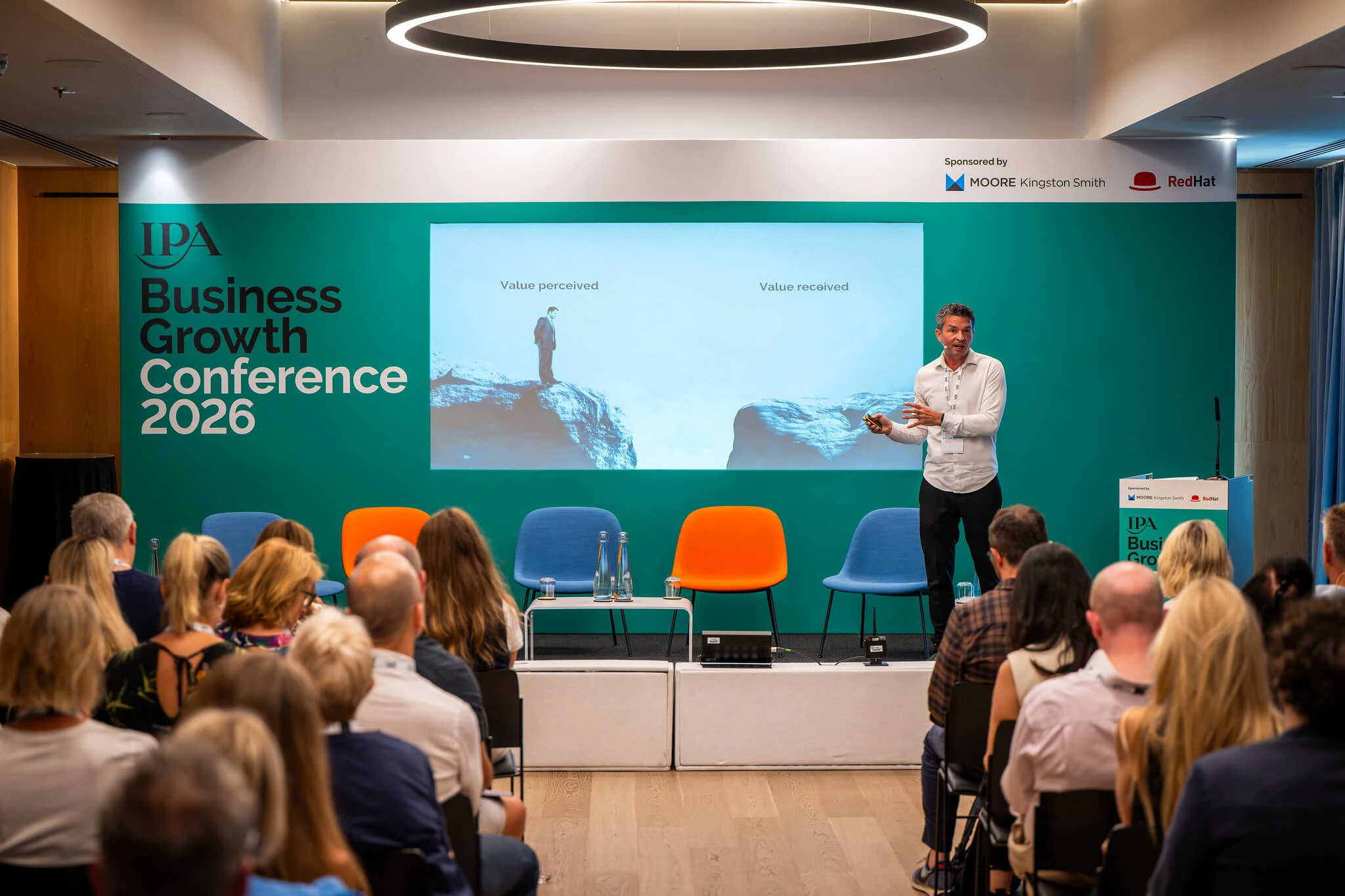
The first deck was by a renowned intermediary and covered pitching. His advice included your CEO meeting the client in reception and pitch teams holding daily stand-ups to stay aligned. All valid - but hardly new news.
He also advocated ambulance-chasing trade press stories to talk your way onto pitch lists at the last minute. Even ignoring the low success rate of getting in, how often does that result in a win? It’s not hunger, it’s desperation.
Coffee is for closers
The second presenter covered lead generation. A polished, classically trained IT salesperson, she’d clearly had a formal (i.e. non-agency) sales upbringing - monthly targets, office leaderboards and daily jeopardy.
She’d actually lived Glengarry Glen Ross, rather than just referencing ‘ABC’ or the dreaded steak knives (NSFW).
She knew the lingo, owned the stage and had the ‘hustle’. The audience lapped up tips and tricks on email subject lines, “DMs”, buttering-up ‘gatekeepers’ and door-stepping.
But then someone asked about inbound marketing, helpfully highlighting core concepts like expertise and thought leadership. The presenter gracefully ‘objection-handled’ the question, explaining that success came from personality, sales smarts and timing.
Really?
Gizza job
Don’t get me wrong, both presenters were great, speaking knowledgeably to brief and getting a good reaction. But I’m not sure what’s more shocking - that agencies still don’t know this stuff, or that they still use it.
The reason that lead generation flummoxes agencies is because they assume there’s a secret formula. There isn’t, except maybe garbage in = garbage out. With no genuine expertise to offer and a ‘keep asking / keep hoping’ strategy, you’re hardly having a conversation about mutual value. You’re basically Yosser Hughes.
As for pitching, traditional agencies are obsessed with it, like it’s 95% of the new-business race, instead of the dip for the line.
Dangerous legacy thinking
All this highlights a reactive mindset that should’ve died years ago - that new-business is a numbers game, aka a license to spam. People still argue that the more you do, the more you win. But crossing the road blindfolded ten times without dying doesn’t make it smart.
There’s a tacit admission that your agency is a commodity, trading on little more than right-time-right-place.
But surely it’s ideas that win pitches, you might say. Well, sometime yes, but rarely on their own. Besides, do you really want to stake your future on a subjective lottery?
Superstar salesman, here we go
These outdated ideas aren’t just inefficient, they mask the root causes of failure - including the cult of personality around new-business people. If you could just find someone with enough energy, hunger and chutzpah, then everything will be okay.
Well, it might - until your superstar salesperson demands a third raise in six months, leaves or, worse still, starts to dominate your brand. At best, that’s a massive risk. At worse, it’s self-defeating short-termism.
So it’s hardly surprising that there’s still so much confusion around hiring new-business people and what kind of model to slot them into.
The new-business enlightenment
Ultimately, old-skool best practice is hygiene not aspiration. It might create some incremental gains for inexperienced teams, but seriously, the century’s nearly 20% gone and we’re still using techniques from the pre-digital age.
Hit-and-hope spam and blagging your way onto pitch lists both perpetuate the myth that an inefficient, subjective and submissive beauty parade is the only way to win clients. No wonder agencies struggle for confidence.
The good news is that the new-business has evolved. Read anything by the likes of Blair Enns, Kevin Allen, David C. Baker, Tim Williams or Ron Baker and you’ll see. But without some fresh thinking, you’ll still be doing new-business in the dark.